Insulation pins are essential method of fixing various types of insulation materials. These insulation fasteners are also called insulation nails, insulation cleats and in some cases, especially with industrial insulation, these might be referred to as stud welding pins or simply studs.
Pins for insulation come in various sizes, diameters and are manufactured from different materials.
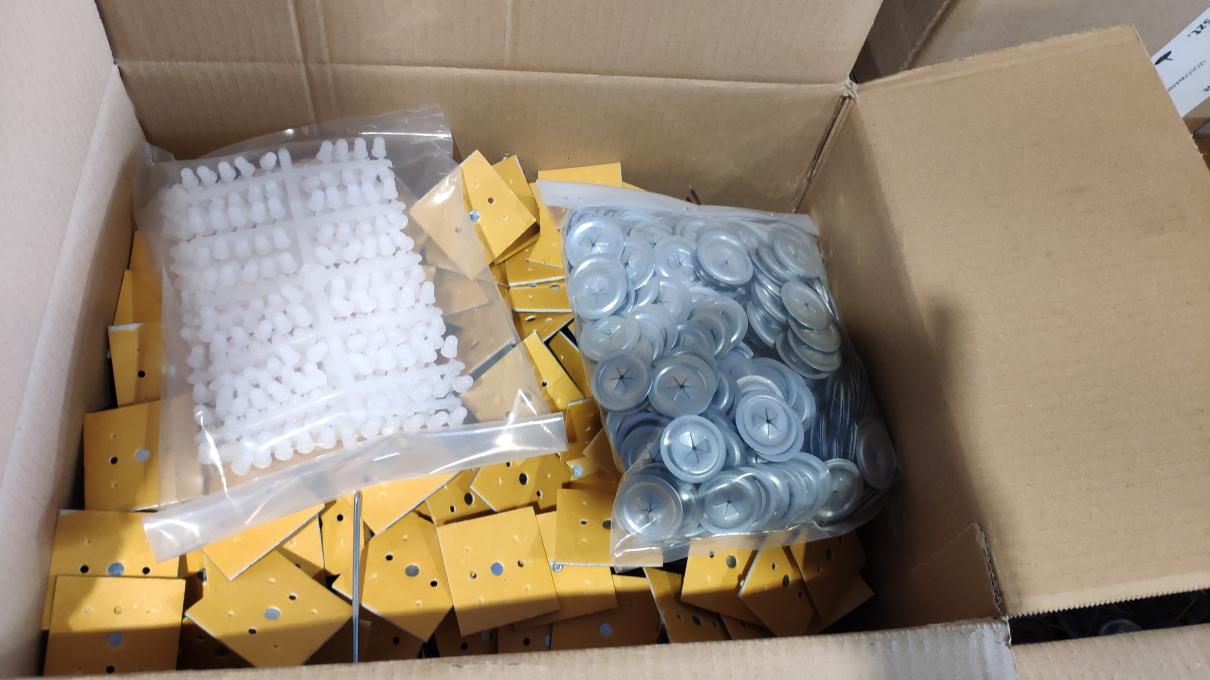
You can also buy self-adhesive insulation pins. It all depends on the specific application and temperature range of the insulated medium.
Main benefits of Insulation pins:
Easy to install
Support insulation
Rigid and strong
What’s the role of insulation pins?
Insulation pins help to secure an insulation material, whether it’s a mat, blanket, turbine insulation blankets or board type of insulation. Pins support insulation in vertical and horizontal positions. Insulation pins allow insulation material to fit tight against the insulated medium.
What is more, insulation pins prevent sagging of insulation.
Insulation pins are used to secure products like mineral wool, stone wool, glass wool, ceramic wool, aerogel and PIR and PUR.
For insulation pins to work correctly these need to be designed for the specific use and also installed in the correct manner.
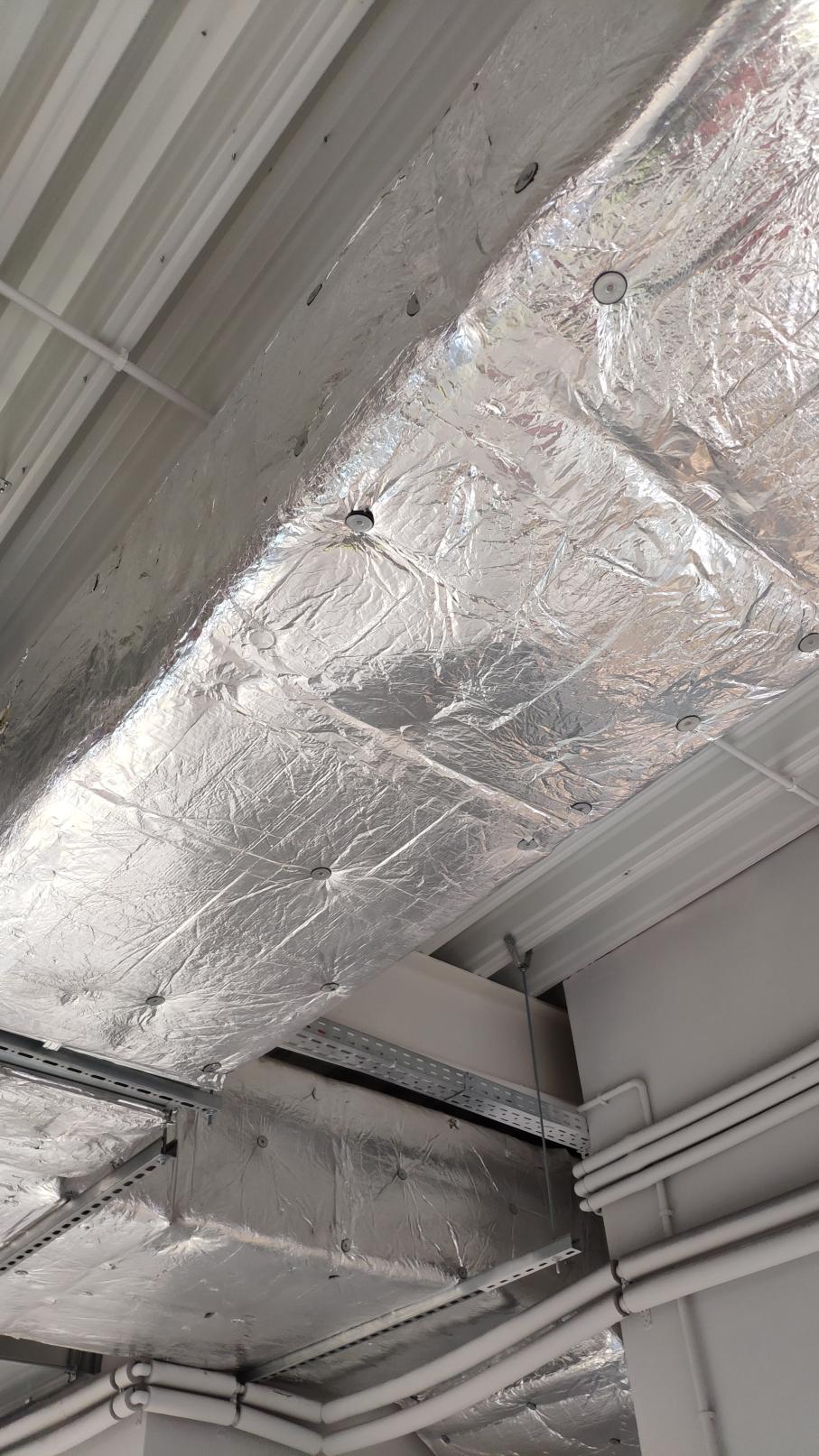
Where to use insulation pins?
Pins for insulation are mostly used on large flat or rectangular surfaces. For example, pins for insulation are applied for ventilation and heating ducts, air ducts, flue gas ducts, boiler walls, large round or rectangular vessels or on ships for bulkhead and deck insulation.

How to select the right insulation pin?
The easiest way would be to check your project technical specification.
If you insulate ventilation ducts, boiler walls, large vessels or other equipment, you should follow the project specification.
Some projects may have a separate technical specification for insulation. In other cases, these pieces of information about insulation pins may be part of the mechanical specification.
This document should inform you about the types of pins, quantity, length and method of installation.
If you have such a document in electronic version just search for keywords like pins, fixing, fasteners.
What to do when there is no technical specification for insulation pins?
Insulation specification is not always available. Sometimes you don’t have access to the project specification. Another time the one you have does not contain any details about insulation pins.
In such a case there are several tips you can follow.
How to choose the material of insulation pins?
If you fix the insulation pins by stud welding, welding or screwing than insulation pins should be manufactured from the material compatible to the material to which these are fixed.
This is done to avoid bimetallic (galvanic) corrosion between different metal components. Furthermore, by using the same material you can be sure that the insulation pin will be suitable for the operating temperature range of the insulated medium.
In simple words, if you have a galvanised steel duct you should use galvanised insulation pins. If you have a stainless steel vessel, you should use stainless steel pins.
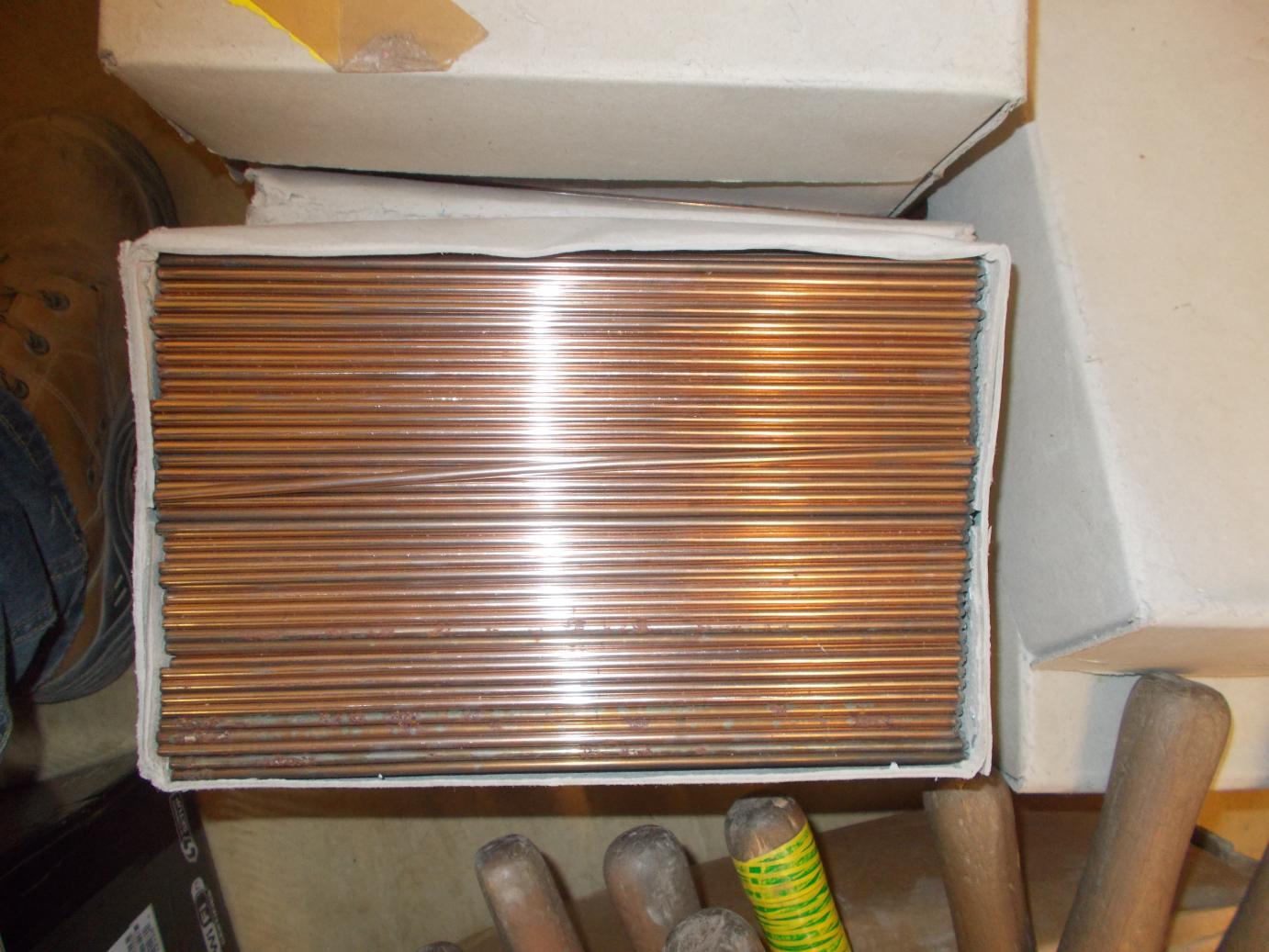
Very often in industrial insulation steel grades which are used for metal equipment can be S235 or S355. In this case it’s common to use copper coated insulation pins.
In some cases insulation studs are welded to boiler walls manufactured from the 16Mo3 steel. Therefore, you should use 16Mo3 insulation pins.

How to avoid bimetallic corrosion between insulation pins and insulated medium?
Bimetallic corrosion can be avoided with the use of self-adhesive insulation pins. This can be achieved with dissimilar metals for example on HVAC insulation.
Heating and ventilation ducts with low service temperature (below the softening point of the adhesive) can be equipped with self-adhesive insulation pins. Self-adhesive pins include a small plate covered with adhesive layer. This self-adhesive layer separates dissimilar metals from each other. In this way the bimetallic corrosion can be avoided.

How to select the right size of the insulation stick pins?
Insulation pins come in various diameters and lengths. Once you determine the right material, you should choose the size of your insulation pins.
In most cases it would be determined by the insulation thickness, service temperature and applicable loads.
Insulation of HVAC components usually works with 3mm or 4mm diameter insulation pins.
Reviewing various standards we found exact details only in German norm AGI Q 03 and AGI Q 101.
For industrial insulation the minimum diameter is 4mm up to insulation thickness of ≤120mm.
You should use 5mm diameter pins for insulation thickness ≥130mm and 6mm diameter pins for insulation ≥240mm thick.
What’s the right length of insulation pins?
You should choose the length taking several factors into consideration. First item to consider it the insulation thickness.
Your insulation stick pins need to be longer than insulation material to retain it properly. How much longer? Usually 10-20mm longer should be sufficient.
How many insulation pins should you use?
The best answer is: it depends. It depends on the type of insulated medium, service temperature, application, environment (inside or outside), applicable loads and applicable standards and norms.
The quantity of pins for insulation will differ for ventilation duct inside an office space and for a flue gas treatment duct outside the power plant.
The former may utilise the average of 4-6 pins per square meter. Top part of the duct would require less pins for insulation, whereas the bottom part needs more pins to prevent the insulation material from falling down and even from sagging.
The latter is more complicated as we need to take into consideration the insulation thickness, dead load of the insulation, medium temperature, wind, rain and snow loads. And is some areas you may need to include seismic loads in some cases.
Let us look into specific national standards.
Insulation pins in Norwegian Insulation Standards
We checked two Norwegian standards:
NORSK – AGR EmiTeam AS Bergen – Insulation Handbook
And NORSOK R004 – Piping and equipment insulation.
The former one does contain a little bit of information when it comes to pins for insulation. The latter, however, does not mention it at all.
The Insulation handbook recommends minimum of 6 pins per m2. It also says that pins should be distributed evenly. This handbook does not mention how to select he right thickness or length of the insulation pin.
Insulations pins in German Insulation standards
German norm DIN 4140:2014 – Insulation work on industrial installations and building equipment – Execution of thermal and cold insulations.
This norm does give us some information about insulation holding pins.
For example it recommends to use 3mm diameter pins for insulation up to 200mm thickness. Above that 4mm diameter insulation pins should be used. It also recommends to use minimum of 6 pins per m2 and a minimum of 9 pins per m2 for the underside fixing of insulation.
There is also a recommendation for ventilation ducts. In this case metal pins should be larger or equal to 2mm in diameter.
The norm further mentions that when you use silicate wool mats, you should double the amount of pins. A
And if you use aluminium faced mats on ventilation ducts with insulation thickness equal and lower to 50mm you can lower the amount of pins.
German norm VDI 2055: Part 1
This norm gives examples of various industrial insulation designs and build-ups. Once such example is on point 5.4.5. In this case the medium temperature is 430°C, insulation thickness is 240mm. The fixing elements are metal pins – 6mm diameter with the amount of 8 pieces per m2.
German norm AGI Q 101 – Insulation of power plant components
In section 4.3 we find several useful pieces of information about pins.
Insulation mats should be fixed with minimum of 6 pins per m2 for plane surfaces, minimum of 10 pins per m2 for undersides.
It also recommends the diameter:
– 4mm up to insulation thickness of ≤120mm
– 5mm diameter pins for insulation thickness ≥130mm
– 6mm diameter pins for insulation ≥240mm thick6
Insulation retaining pins in British Standard – BS 5970:
– Code of practice for thermal insulation of pipework and equipment in the temperature range of –100 ºC to +870 ºC.
This norm describes in detail various parameters for installation of insulation attachments. We will touch upon this subject as well in the further subsections. BS 5970 also mentions sizes and spacing of insulation pins.
Point 24.2.9 shows recommendation for average spacing of insulation attachments. For vertical surfaces this should be 450mm square spacing. For upward-facing surfaces it should be 600mm square spacing. For over-hanging and downward –facing surfaces it should be 300mm (maximum) square spacing.
For which materials insulation pins are not recommended?
We don’t recommend using insulation pins as insulation fasteners for brittle insulation materials. For example cellular glass or calcium silicate. These types of insulation materials are either glued or fixed with metal bands.
How to install insulation pins?
When it comes to installation of pins we supply these in two categories. First group of insulation fixings are self-adhesive insulation pins. These are mostly used in heating and ventilation and in lower range of temperatures (not too hot, not too cold). Second group consists of welded insulation pins.
Before you stick self-adhesive insulation pins you need to make sure that the surface is dry, clean and degreased. Usually brushing it off is sufficient for the adhesive to work properly. In some cases you need to use a cleaning agent or hard brush.
Installation of welded insulation pins
In order to install welded insulation pins, often called stud welds or insulation stud pins. You would need to have a short arc welding machine or stud welder. In some cases you could get away with electrode (stick) welding equipment. However, this is very time consuming and you would need longer pins to compensate for the bended part that gets welded.
Stud welding of insulation pins integrates the same rules and metallurgical features as other arc welding methods. In such a case electric arc melts the end of the stud or insulation retaining pin and a part of the base material. Insulation pins is pushed into the base material automatically. This way you can achieve a high quality fusion weld.
What are the qualifications required for stud welding of insulation pins?
As in any welding process a person operating welding equipment and performing welding work should be trained and experienced. Various welding methods require welder’s certification.
International norms mention several welding processes which are suitable for stud welding of insulation pins.
Most popular are:
783 – drawn-arc stud welding with ceramic ferrule or shielding gas
784 – welding of stud bolts by short-cycle induction arc, with gas protection or without gas
We will not detail all the information about stud welding here. It’s better to refer you to relevant specialists like HBS –stud welding equipment.
We recommend that the personnel involved in stud welding of insulation pins has relevant training and experience.
Welder certification can be in a form of a test certificate for welding operators according to DIN EN ISO 14732.
How to check the quality of installation of insulation pins?
There are several non-destructive tests that can be carried out on adhesive and stud welded insulation pins.
One example is a visual test. Quality inspector can check visually the quality of the stud weld. In this instance the inspector checks the fillet at the bottom part of the stud.
If you want to be super meticulous you can also use a full range of non-destructive testing used in other welding processes. These might be dye penetrant test or magnetic or ultrasound tests. However, from our experience such tests are not used for checking the insulation pins.
Pull test of insulation pins
Another example of quality test could be pull out test. Design load is applied on the pull testing device. You would need to use suitable adapter that can connect to the tested insulation pin. In our opinion it is always better to do pre-tests or mock-up tests.
This would involve a small portion of the actual base material to which the insulation pins are welded. With this arrangement you can apply load progressively and test it until the stud fails.
Torque bending test for insulation holders
Last but not least would be a torque bending test. Such tests are required by some QA inspectors.
In order to carry out such a test you need a dedicated test kit. Usually you can buy it from stud welding equipment suppliers. Different pin or stud diameter should withstand different torque. The kit allows you read the necessary torque from a table and to apply it on the torque wrench. The table shows parameters depending on the stud diameter, type of material and material thickness. The numbers given in a table are based on the experience within metallurgical industry. These figures show the limit between the elastic and plastic deformation between the pin and the base material.
When a ratio between the stud diameter and base material thickness is lower than 1:2 the base material will deform. When such ratio is higher than 1:2 the stud will fail.
One Response