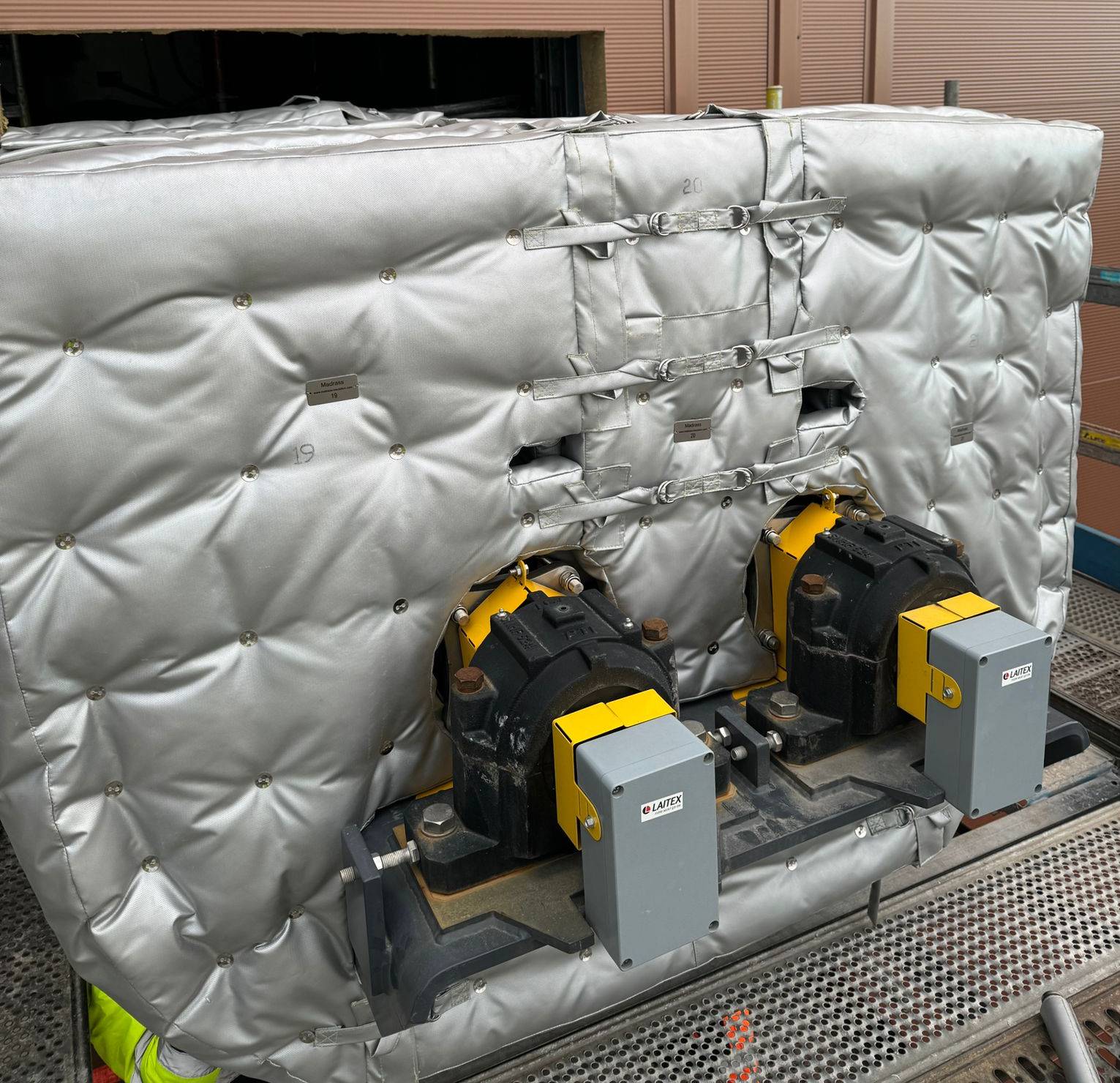
Noise insulation jackets can help in operational efficiency, worker safety, and regulatory compliance in high-demand environments like power plants, petrochemical facilities, energy-from-waste operations, and industrial boiler systems. From insulating hot water piping to protecting heat exchangers, the focus has often been on thermal performance – but acoustic insulation is equally critical. For such requirements we provide noise insulation jackets, also known as acoustic insulation mattresses: custom-engineered, removable coverings designed to dampen sound emissions from noisy machinery. These aren’t your standard blankets; they’re precision-crafted noise barriers that integrate seamlessly with equipment, offering both noise reduction and additional protective benefits.
In this article, we’ll dive deep into what noise insulation jackets are, their applications across various industrial equipment, and why their removable design makes them a game-changer for modern facilities. Our experience covers real-world implementations in sectors like petrochemical processing and power generation.
Why do we need noise insulation jackets
Noise insulation jackets are specialized, multi-layered mattresses tailored to wrap around industrial components, absorbing and blocking sound waves to reduce overall decibel levels. Typically constructed from materials like fiberglass, mass-loaded vinyl (MLV), or stone wool encased in durable, weather-resistant fabrics (e.g., silicone-impregnated fiberglass for indoor/outdoor use), these jackets function as acoustic barriers. Unlike rigid enclosures, they conform to irregular shapes, ensuring a tight fit that minimizes sound leakage.
From a technical standpoint, their effectiveness stems from a combination of absorption and isolation. The inner layers absorb vibrational energy, converting it to negligible heat, while outer barriers reflect or block sound transmission. In power plants, for instance, where boiler noise can exceed 90 dB, these jackets can achieve reductions of 5-15 dB or more, depending on thickness and material composition – crucial for meeting safety noise exposure limits of 85 dB over an 8-hour shift.
What sets them apart in industrial insulation? Their dual-purpose design often incorporates thermal properties, preventing heat loss in hot systems or condensation in cold ones, all while prioritizing acoustics.
Key Applications of noise insulation jackets: Insulating Noisy Industrial Equipment Acoustically
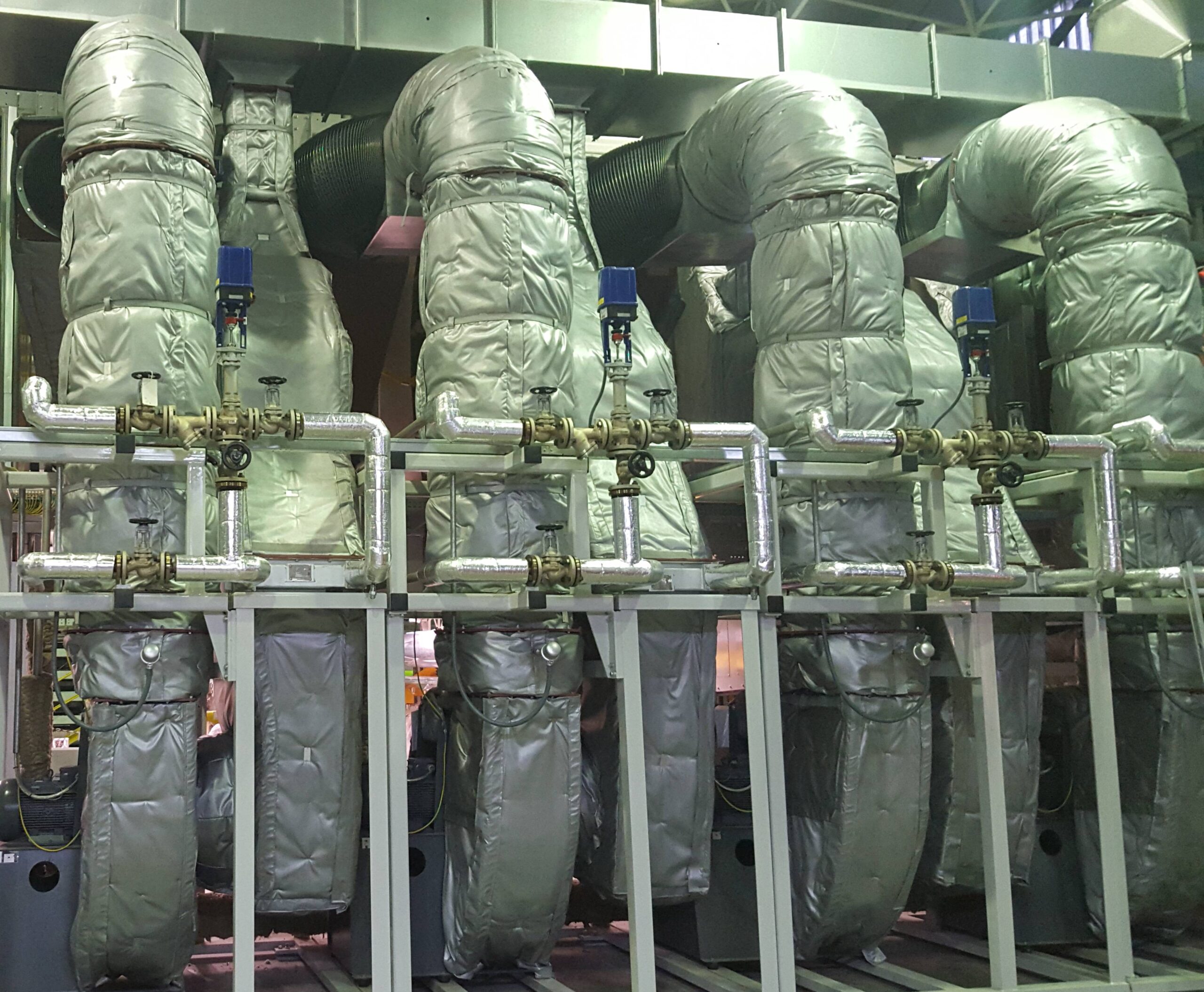
In petrochemical plants and energy-from-waste facilities, equipment like fans, augers, compensators, and pumps generates significant noise through vibration, airflow turbulence, and mechanical friction. Noise insulation jackets are ideal for these, providing targeted attenuation without impeding functionality. Let’s break it down by equipment type.
Noise Insulation of Fans and Blowers
Power plants, biomass plants or energy from waste facilites are equipped with primary air ducting, secondary air ducting and recirculation air ducting systems. Each of these systems requires powerful fans to move air through ducts. Industrial fans, common in ventilation systems for power plants and heat exchangers, can produce noise levels up to 100 dB from blade rotation and air movement. Removable jackets wrap the fan housing, inlet/outlet ducts, and motor casings, reducing radiated noise by 8-12 dB.
Noise protection for Augers and Conveyors
Augers, used in material handling for energy-from-waste plants, or in breweries, create grinding and rattling sounds from screw mechanisms. Acoustic mattresses enclose the auger barrel and drive units, damping vibrations that travel through structures. Benefits include not only noise reduction (typically 5-10 dB) but also dust containment, which is vital in hazardous environments. Custom designs with quick-release fasteners allow for easy cleaning, aligning with maintenance protocols in industrial power plant boilers.
Sound Insulation of Compensators and Expansion Joints
Compensators in piping systems for hot water or steam lines absorb thermal expansion but often amplify noise from fluid flow and pressure changes. Fabric or rubber compensators benefit from insulated jackets that incorporate sound-deadening materials, achieving up to 15 dB reduction in low-frequency rumble. In a recent energy-from-waste installation, these jackets minimized vibration transfer to adjacent structures, extending equipment life.
Pumps and Compressors with Noise Insulation Jackets
Pumps in petrochemical and power plant applications generate pulsating noise from impellers and motors. Removable acoustic jackets cover the pump body and connected piping, using layered materials like EVA foam for high-frequency absorption. Reductions of 1.5-8 dB are common, as seen in designs from providers like Shannon Global Energy, where jackets also provide thermal stability to prevent efficiency losses.
These applications highlight the versatility of noise insulation jackets across sectors, from reducing turbine noise in power generation to silencing exhaust systems in waste-to-energy processes.
The Compelling Benefits of Removable Noise Insulation Jackets
Why opt for removable designs over permanent enclosures? As experts who’s specified insulation for numerous items, we can attest to their superior practicality.
Here’s a breakdown:
– Ease of Maintenance and Accessibility: Unlike fixed insulation, removable jackets use hook-and-loop fasteners, straps, or drawstrings for quick removal – often in minutes. This facilitates inspections, repairs, or cleaning without downtime, crucial in 24/7 operations like petrochemical plants.
– Noise Reduction and Worker Safety: By lowering decibel levels, these jackets comply with noise regulations, reducing the risk of hearing loss. Studies show that sustained exposure above 85 dB can lead to permanent damage; jackets mitigate this providing safe workplace.
– Thermal and Energy Efficiency: Many acoustic jackets double as thermal barriers, conserving energy in hot systems (e.g., reducing heat loss in pumps) or preventing condensation in cold systems. This dual functionality can yield ROI through lower utility bills – often within 1-2 years.
– Durability and Customization: Built from non-flammable, weatherproof materials, they withstand harsh environments. Custom sizing ensures a perfect fit, avoiding gaps that could compromise acoustics.
– Cost-Effectiveness and Sustainability: Initial costs are offset by reduced maintenance and energy savings. Furthermore, preventing heat losses enhances sustainability targets.
Technical Insights: Design and Performance Metrics of Noise Insulation Jackets
Designing effective noise insulation jackets requires balancing acoustics with operational needs. Key materials include:
– Absorptive Layers: Fiberglass or mineral wool for sound absorption (NRC ratings of 0.8-1.0).
– Barrier Layers: MLV for blocking (STC ratings up to 30).
– Protective Outer Fabric: PTFE-coated fiberglass for chemical resistance.
Performance is measured in dB reduction across frequencies – e.g., 10-20 dB in mid-range (500-2000 Hz) for pumps.
We always recommend to conduct site-specific simulations and audits for optimal customization.
Noise insulation jackets represent the pinnacle of modern industrial solutions, blending acoustic excellence with the practicality of removability. Whether insulating fans in power plants or pumps in petrochemical operations, they deliver measurable benefits in safety, efficiency, and compliance. If you’re facing noise challenges in your facility, consider custom removable mattresses – contact a specialist today for a tailored assessment.