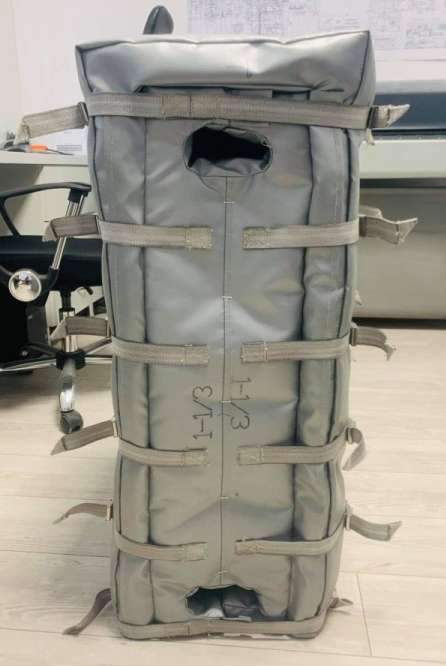
Heat exchanger insulation jackets are another product in our wide insulation products portfolio. We offer not only CNC cut insulation, turbine insulation blankets, nuclear insulation, acoustic insulation, pre-insulated ductwork or valve insulation jackets. A portion of our works include customised heat exchanger insulation.
Manufacturers or installers of such equipment insulate them for various reasons. Nevertheless, once you select heat exchanger insulation jackets you need to make sure these will work as intended.
Madrass heat exchanger insulation jackets feature:
- short payback period (around a year)
- bespoke fit – we fabricate them for specific orders
- easy maintenance – simple no tools installation and removal
- light weight – either in one part or a few parts we make sure you can handle them manually
Do you need any support with heat exchanger insulation jackets? Contact us through the form below:
What is a heat exchanger?

Heat exchanger is a piece of equipment or a system that allows heat transfer from one medium to another. The more efficient the process the better. It means it has to be fast and safe. You can use heat exchangers both in cooling and heating. Usually two mediums are separated from each other by a thin wall. However, sometimes these are in direct contact with each other.
In order to achieve high efficiency of heat exchanger designers maximise the heat exchange surface between two fluids. At the same time the fluid flow resistance has to be minimised.
We can meet heat exchangers in everyday appliances. Some examples of the heat exchangers are in electronic systems like computers or combustion engines in cars.
Even human body includes a heat exchanger system. We use it for breathing. Human nasal passage heats cold air which we later exhale as warm.
Nonetheless, in our post we will focus on the industrial applications of heat exchangers and insulation jackets for these systems.
Where are heat exchangers used?

Heat exchangers are most commonly used in:
- heating
- cooling
- refrigeration
- brewing
- air conditioning
- petrochemical refining
- power plants
- sewage treatment plants
- food production plants
What are the types of heat exchangers?

Different industries and processes require different heat exchangers. Manufacturers produce several types, for example:
- shell and tube heat exchangers
- plate heat exchangers
- plate fin heat exchangers
- pillow plate heat exchangers
The current post however concentrates on the insulation for shell and tube heat exchangers and plate heat exchangers insulation. Therefore, we will not describe other systems here.
Shell and tube heat exchanger insulation
Shell and tube heat exchangers present a different insulation challenge compared to plate units.
Their cylindrical shell, end caps, nozzle connections and saddle supports all require individually shaped insulation components. Our jackets for shell and tube heat exchangers are produced in sections — typically a main body wrap, two end-cap caps and individual nozzle boots — allowing each section to be removed independently.
This is especially valuable in process plants where one nozzle connection may need inspection while the rest of the unit stays insulated.
Characteristics of plate heat exchanger

This type of heat exchanger uses large surface metal plates to transfer heat from one medium to another.
Our partner EQWATTECH whom we support with plate heat exchanger insulation offers various types of plate heat exchangers:
EQWATTECH offers a range of plate and gasket heat exchangers adapted to the needs of your processes. EQWATTECH designs and produces heat exchangers in stainless steel, titanium, 254 SMO, alloy C276. They fit the plates with EPDM, Viton or Nitrile gaskets. Heat exchangers operate in temperatures between -20 ° C and 180 ° C. Gasketed plate heat exchangers have large exchange surfaces and are very compact. These are particularly suitable for HVAC installations, the chemical industry, the food industry.
Heat exchanger insulation removable blankets
Removable insulation blankets (also called insulation jackets) are the preferred solution for heat exchangers that require regular inspection, cleaning or gasket replacement. Unlike rigid mineral wool or PU foam systems, removable blankets can be taken off and re-fitted in minutes without tools or damage.
For plate-and-frame heat exchangers in particular, where the plate pack must be opened periodically, removable blankets offer an unmatched maintenance advantage over any permanent insulation system.
Why should you use heat exchanger insulation jackets?
Wherever there is a heat exchange you should think about insulation.
The most common insulation systems for heat exchangers are:
- polyurethane foam insulation with plastic cover
- insulation coatings
- mineral wool insulation with aluminium or galvanised steel sheet covers
Each of these systems has its downsides.
PU foam with plastic cover has low fire rating E – which means it is combustible. Insulation coatings take long time to cure and dry. Furthermore, such a coating makes inspection and maintenance difficult. Even mineral wool with aluminium or steel sheet cover is problematic for frequent maintenance regime. Operatives often damage such product during dismantling.
Therefore, we believe heat exchanger insulation jackets are most suitable solution for plate heat exchangers and tube and shell heat exchangers.
Heat exchanger insulation jackets are used to:
- reduce thermal bridges and heat loss
- protect against freezing
- prevent condensation
- protect workforce from high heat and potential burns
Energy savings from heat exchanger cover
An uninsulated plate heat exchanger operating at 80–120 °C can lose 500–2,000 W of heat continuously to the surrounding environment.
Over a year, this can represent hundreds of kilograms of CO₂ and significant energy cost.
By fitting a heat exchanger cover with 50–80 mm of glasswool or stone wool, surface heat loss can be reduced by 85–95%. An insulated heat exchanger at typical European industrial energy prices usually delivers payback in 9–14 months. Our engineers can perform a heat loss calculation for your specific unit before order — contact us for a free assessment.
How do we produce heat exchanger insulation jackets?
Production of heat exchanger insulation jackets starts with the detailed design. Usually there are two ways in which we obtain relevant information.
First method includes site survey and detailed site measurements. Our surveyors check the overall dimensions of a heat exchanger. Additionally, they mark openings for connecting pipes, structural steel and other elements. If there is a potential clash with other elements surveyor marks it as well. Once surveyors complete their work they transfer the information to the design and engineering team.

Second method is a desktop exercise. This means analysis of drawings and specification from the customer. Once we go through the drawings we can prepare heat exchanger insulation jacket design.
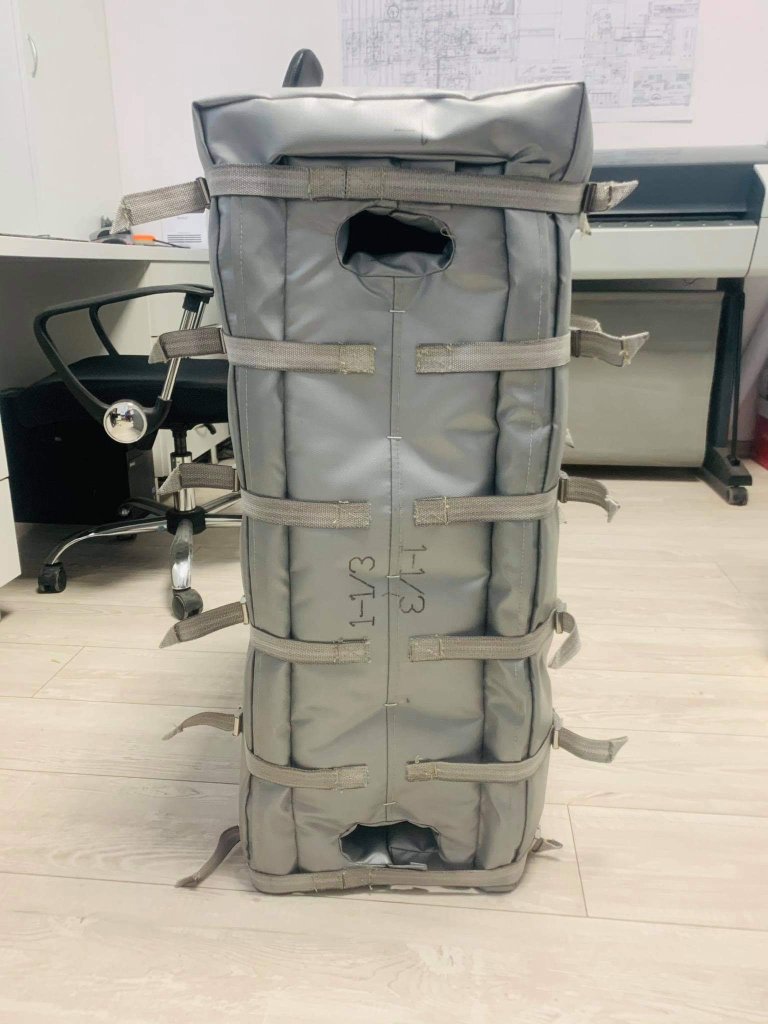
After we finish design and engineering part we can proceed with the actual manufacture. At this stage we employ our CNC cutting equipment and fill in the cut shapes with relevant insulation material. This can be either glass fibre insulation, mineral wool insulation, ceramic fibre or aerogel. With insulation material inside the jacket is sewed to close it. At the end we attach fixings. There are several types which are most common for heat exchanger insulation jackets. These can be straps, springs or hook & wire fixings.
How can we support you with your requirements for heat exchanger insulation jackets?
Removable Blankets for Plate and Frame Heat Exchangers
Plate and frame heat exchangers require regular opening for gasket inspection, plate cleaning and pressure testing — which makes removable insulation blankets the only practical insulation solution for this equipment type.
Unlike rigid cladding boxes, which must be disassembled and discarded at every service interval, removable insulation blankets fix using straps or hook-and-wire closures and can be fully removed and refitted in under a few minutes without tools or damage to the unit.
Each blanket is custom-made to fit the exact frame size and nozzle layout of your heat exchanger, eliminating thermal bridges while keeping every tie bolt and pressure plate fully accessible.
For plate and frame units in food processing, district heating, pharmaceutical and industrial process applications, this combination of thermal performance and maintenance-friendly design delivers payback typically within 9–14 months — without compromising service access.
Additional information – International norms for heat exchangers
If you find heat exchangers interesting you can expand your knowledge about these systems in the international norms.
The list shows current norms. If you know that any of these norms has been withdrawn, please let us know.

British Norm and European Norm:
BS 853-2:1996 – Specification for vessels for use in heating systems. Tubular heat exchangers and storage vessels for building and industrial services
BS EN 1148:1999 – Heat exchangers. Water-to-water heat exchangers for district heating. Test procedures for establishing the performance data.
BS EN 13487:2019 – Heat exchangers. Forced convection air cooled refrigerant condensers and dry coolers. Sound measurement.
BS EN ISO 12211:2012 – Petroleum, petrochemical and natural gas industries. Spiral plate heat exchangers.
BS EN ISO 12212:2012 – Petroleum, petrochemical and natural gas industries. Hairpin-type heat exchangers.
BS EN ISO 13706:2011 – Petroleum, petrochemical and natural gas industries. Aircooled heat exchangers.
BS EN ISO 15547-1:2005 – Petroleum, petrochemical and natural gas industries. Plate-type heat exchangers. Plate-and-frame heat exchangers
BS EN ISO 15547-2:2005 – Petroleum, petrochemical and natural gas industries. Plate-type heat exchangers. Brazed aluminium plate-fin heat exchangers
BS EN ISO 16812:2019 – Petroleum, petrochemical and natural gas industries. Shell-and-tube heat exchangers.
German norm DIN:
VDI 3805 Blatt 11:2003-07 – Produktdatenaustausch in der TGA – Wärmetauscher Fluid/Wasserdampf – Luft (Product data exchange in the Building Services – Heat exchanger fluid/steam – air)
It is a flexible type insulation produced for specific heat exchanger design. The jacket consists of insulation material, textile fabric and fixings. Each component is engineered and select to specific needs of a heat exchanger.
As often, it depends on a specific case. Insulation for heat exchangers can vary from 30mm to 100mm. Our engineers calculate the minimum and economical insulation thickness taking various parameters into design. These include for example operating temperature, ambient temperature, medium freezing temperature, designate use.
We would recommend using fibrous material like glasswool, stone wool or ceramic wool for hot applications. For cold temperatures where condensation might be an issue you can apply closed cell insulation like elastomeric foam.
It is important to insulate heat exchangers for several reasons. Each case is different and has it own reasons. Main advantages of using insulation for heat exchangers are heat loss prevention, condensation prevention, personal protection of personnel and protection against freezing.
9 responses