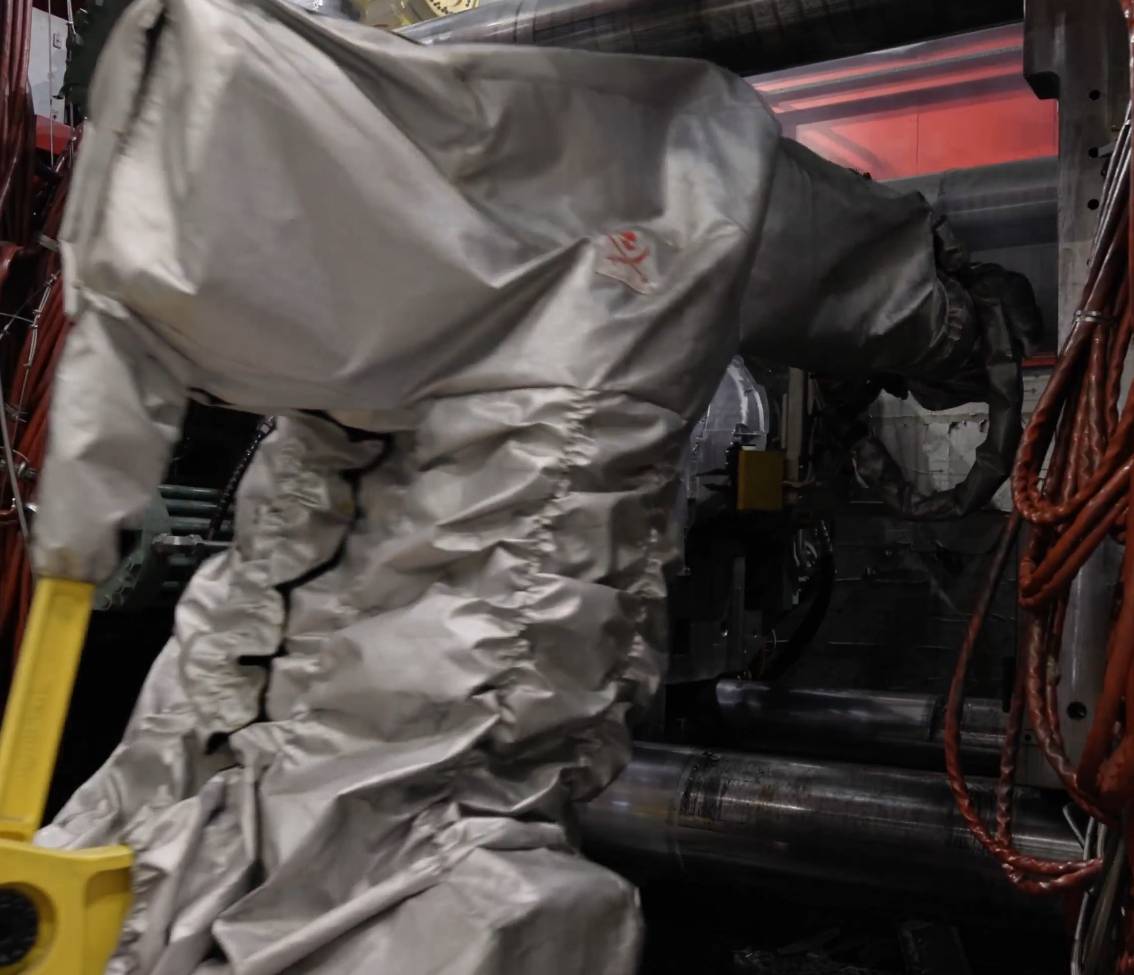
Robot covers are being added as a new line of products for the industrial and automotive sector. These robot protective covers are designed specifically to keep industrial robots clean, cool, and protected in harsh production environments, offering a long‑term, sustainable solution instead of makeshift or disposable protection. Built with the same attention to fit, durability, and serviceability found in Madrass insulation products, these robot covers give manufacturers a way to protect their automation investments while minimizing downtime and maintenance costs.
Why robot covers are essential in modern production
Industrial robots operate in environments where dust, metal chips, heat, paint overspray, coolant mist, and chemical residues are constant threats. In car‑body welding, for example, sparks and molten spatter can land on joints and cables; in paint‑booth applications, overspray can build up on motors and sensors; in machining cells, fine metallic dust and coolant can penetrate bearings and wiring. All of these conditions accelerate wear, increase the risk of electrical faults, and shorten robot life.
A well‑designed robot protective cover acts as a tailored barrier that shields moving parts while still allowing the full range of motion. It prevents contaminants from entering joints, linear guides, and cable carriers, reducing friction, heat buildup, and mechanical stress. This not only helps avoid premature failures but also supports consistent cycle times and positioning accuracy, which is critical in high‑precision manufacturing.
Core benefits of robot protective covers
Extended robot lifespan: By keeping abrasive dust, metal chips, and chemical residues away from joints, bearings, and cables, robot covers help prevent wear that otherwise leads to costly repairs or replacement. This is especially important in high‑cycle applications such as assembly lines, palletizing, or pick‑and‑place systems.
Lower maintenance and downtime: When sensitive parts stay clean and cool, inspection intervals are less frequent and service work is simpler. Technicians are not constantly removing caked‑on paint, metal grindings, or coolant residues, which reduces labor time, spare‑part usage, and unplanned stoppages.
Custom, machine‑specific fit: Every robot cover is created to match the exact robot model and application. Whether it is a six‑axis welder, a SCARA robot, or a large articulated arm used in material handling, the cover is tailored to the kinematics so that it moves smoothly with the robot without interfering with tooling, end‑effectors, or safety devices.
Easy installation and removal: The covers are designed for quick mounting and detachment, often using Velcro, zippers, or snap‑on fasteners. This allows operators to install, inspect, or remove the cover during planned maintenance without having to disassemble the robot or modify the cell layout.
Thermal and environmental protection: Drawing on Madrass’s experience in removable insulation, the robot covers help manage localized heat buildup from motors, drives, and nearby processes. They can also shield the robot from splash exposures in wet‑processing areas or from chemical vapors in coating and cleaning lines.
Examples of real‑world applications
Automotive welding cells: In body‑shop welding lines, robots are exposed to continuous heat, sparks, and molten spatter. A robot cover on the upper arm and wrist can deflect spatter away from sensitive joints and cables, reducing the need for frequent cleaning and preventing spatter‑induced blockages in air or water lines. Operators notice fewer arc‑fault alarms and fewer unplanned shutdowns caused by overheating or jammed moving parts.
Paint and coating lines: In paint‑booth and finishing applications, overspray can accumulate on motors, sensors, and cabling. Reusable robot covers act as a “second skin” that keeps the robot clean while still allowing paint robots to reach tight corners and complex contours. At the end of a shift or production run, technicians can wipe or lightly wash the cover instead of manually scrubbing the robot, which improves ergonomics and reduces paint‑booth contamination.
Machining and metal‑forming: In CNC machining centers or stamping lines, robots grab workpieces while chips and coolant spray through the cell. A robot cover on the forearm and wrist helps prevent fine metal dust and coolant from entering bearings and joints. This is particularly valuable in long‑running production shifts where operators cannot afford repeated cleaning stops.
Food, beverage, and packaging: In clean‑room or hygienic environments, robots move products through filling, labeling, and palletizing operations. Robot covers made from easy‑to‑clean, food‑grade compatible fabrics help protect the robot from flour, sugar, moisture, and cleaning agents, while still allowing the robot to operate reliably in high‑humidity or wash‑down areas.
Reliable robot covers vs disposable covers
When choosing protection for robots, plants often face a trade‑off between reliable, reusable robot covers and disposable protective covers. Disposable covers are typically made from lightweight, single‑use materials such as thin plastic or non‑woven films and are intended for short‑term tasks, such as during a specific maintenance operation, a temporary process change, or a one‑off production run. They offer rapid, low‑upfront protection but come with serious limitations: low durability, poor resistance to heat and abrasion, minimal dust or splash protection, and no long‑term support for machine health. Because they are designed to be thrown away after each use, they also generate recurring material and waste‑handling costs, plus the ongoing labor of applying and removing them for every cycle.
In contrast, our robot covers are engineered for repeated, long‑term use. They are constructed from robust, flexible fabrics that withstand mechanical stress, temperature fluctuations, and repeated wash‑downs. The covers are built to be reusable, washable, and, in many cases, repairable, so they can last for years across hundreds or thousands of production cycles. From a total‑cost perspective, this means higher upfront investment but far lower lifetime costs when factoring in reduced downtime, fewer maintenance interventions, and elimination of recurring disposable‑cover purchases.
For facilities that run multiple robot cells—such as several arc‑welding robots, several palletizing robots, or a mixed fleet in an integrated assembly line—reliable, reusable covers quickly become the most economical choice. Maintenance teams can standardize on a common cover design per robot type, simplify training, and streamline spare‑part inventory. Production planners can schedule cover cleaning or inspections as part of routine maintenance routines, rather than scrambling for temporary protection whenever a new product or process is introduced.
How Madrass robot covers fit into your protection strategy
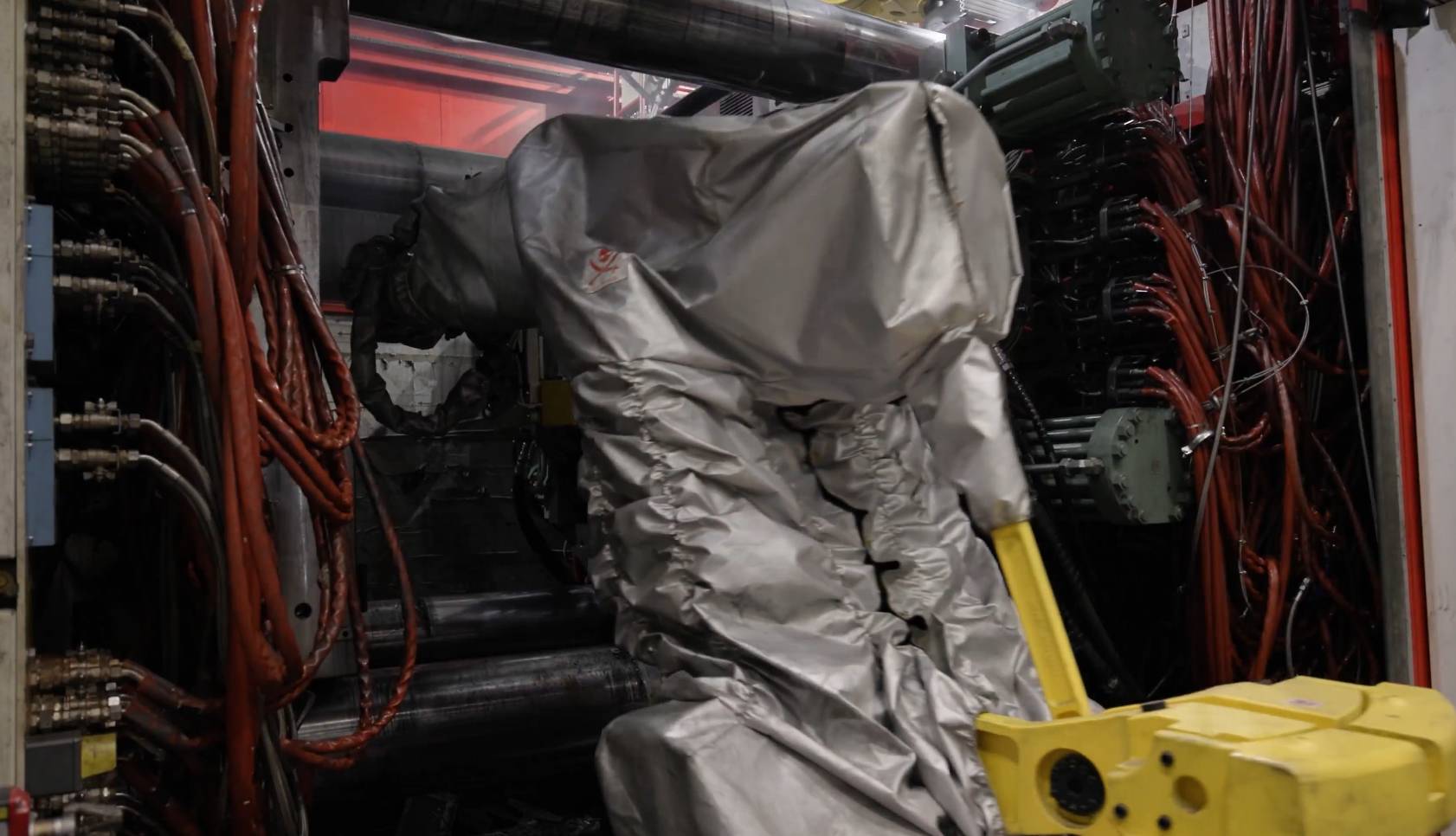
Robot protective covers are not a standalone add‑on; they are part of a broader philosophy of removable, serviceable protection that already underpins the company’s insulation products. Just as removable insulation mattresses allow operators to inspect and service equipment without permanent, hard‑to‑remove cladding, Madrass robot covers enable inspection, repair, and cleaning without having to dismantle the robot or its protective layer.
Integrating these covers into your automation strategy means:
Protecting high‑value robots in the most aggressive parts of the plant, such as welding, painting, and high‑chip‑generation machining.
Standardizing protection across similar robot models to reduce complexity in spare‑part management and training.
Aligning maintenance schedules so that robot covers can be inspected, cleaned, or replaced during planned stops, rather than in emergency situations.
For manufacturers looking to improve robot availability, cut lifecycle costs, and strengthen overall production reliability, Madrass robot covers provide a practical, durable, and cost‑effective solution. By combining the company’s proven expertise in removable insulation with the specific demands of industrial robotics, these robot protective covers help plants get more from every robot while simplifying maintenance and reducing unplanned downtime.
Get in touch for a free quote!