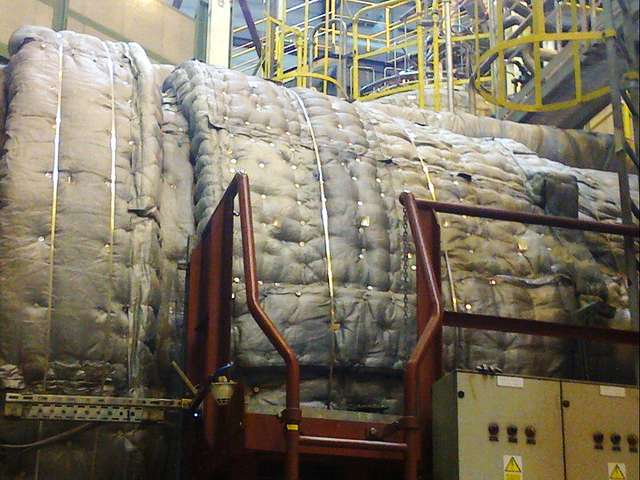
Power plants are among the most thermally demanding industrial environments in the world. From gas turbines and heat-recovery steam generators to steam piping, boilers and hundreds of valves, every component that carries heat is a potential source of energy loss, personnel risk and unplanned downtime. Power plant insulation is the discipline of keeping that heat where it belongs — inside the process — while keeping equipment accessible for the maintenance teams who keep the plant running.
At Madrass, we design and manufacture removable insulation jackets for power plant equipment. Our fabrication approach — design in CAD, cutting on CNC tables, sewing to fit the equipment’s geometry — is documented across our product pages, from single valve jackets to turbine applications.
The Importance of Insulation in Power Plants
Insulation in a power plant is not an afterthought — it directly affects the plant’s efficiency, safety and maintenance costs. The main functions of power plant insulation are:
Reducing heat loss. Uninsulated or poorly insulated equipment loses thermal energy to the environment, forcing burners, boilers and heat-recovery systems to work harder to maintain the same output. Well-designed insulation of hot equipment reduces these losses and supports the overall efficiency of the plant.
Personnel protection. Power plant equipment can reach surface temperatures that cause burns on contact. Insulation jackets and covers are used to reduce accessible surface temperatures — for each application, the performance must be designed and verified against the project’s requirements, including any specified maximum surface temperature.
Condensation, moisture and corrosion management. On cold and hot services alike, moisture is one of the main enemies of insulation systems: it degrades thermal performance and is a key driver of corrosion under insulation (CUI). Insulation supports moisture management and — critically — makes inspection possible, because removable jackets give maintenance teams regular access to check the equipment beneath. Moisture management and inspection remain necessary whatever the insulation type. More on this in our CUI article.
Noise reduction. Mechanical equipment such as turbines, pumps and fans generates noise. Acoustic insulation solutions are designed to reduce noise exposure for personnel inside the plant — see our noise insulation jackets.
Freeze protection and heat maintenance. Some lines and instruments must be kept at a minimum temperature. Electrically heated covers with trace heating are designed to keep media flowing and instruments operational.
Which equipment requires insulation at a power plant?
A thermal power plant — gas, coal, biomass or combined cycle — contains hundreds of components that require insulation. The applications we have dedicated product pages for, and most often design jackets around, include:
Gas and steam turbines — turbine casings, exhaust hoods and associated piping. Removable turbine insulation blankets allow maintenance access to instrumentation and bolts without destroying the insulation.
Steam piping and flanges — main steam, reheat and auxiliary lines, including flanged joints that must remain inspectable.
Valves and actuators — gate, globe, ball, control and safety valves. Removable valve insulation jackets give operators access to handwheels and actuators.
Heat exchangers — shell-and-tube and plate heat exchangers in feedwater, condensate and cooling circuits. See our heat exchanger insulation jackets.
Other equipment commonly insulated in power plants — boiler walls, doors, drums and HRSG casings; tanks and vessels; exhaust ducting, silencers and stacks; pumps and compressors — can also be candidates for removable jackets; each such application needs individual technical assessment. If your equipment is not on the list, send us a photo or a drawing and we will assess it.
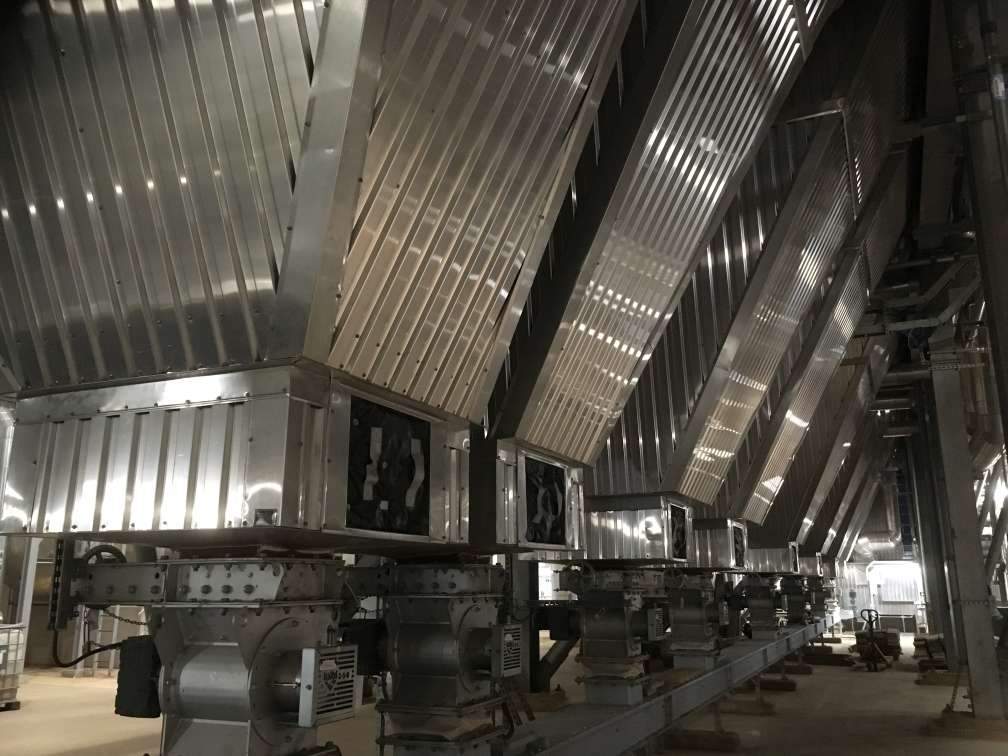
Removable insulation solutions for power plants
Traditionally, power plant equipment was insulated with hard, lagged insulation: mineral wool fixed with studs and wire mesh, finished with cladding. This solution can be very durable, but it has a well-known weakness in a power plant: where fixed insulation must be dismantled for access, maintenance can require its removal and reinstatement — and in many plants, it is never properly rebuilt afterwards.
Removable insulation jackets and mattresses are the alternative for equipment that needs access. They are textile covers with an insulation core, fastened with hooks, lacing wire or straps, that can be taken off and reinstalled by plant staff. The insulation core stays encapsulated within the jacket construction, and the sections are designed so that each part can be removed independently.
For power plants, the practical result is:
Insulation that is reinstalled after maintenance instead of being left off
Less insulation-related maintenance work — removable jackets are designed for repeated access and may reduce dismantling/reinstatement work, depending on the installation and site procedures
Cleaner plant housekeeping — removable jackets look professional and can be labelled with equipment tags
The option to combine thermal insulation with acoustic performance or electric trace heating in one cover
How quickly a jacket is removed and reinstalled, and whether special tools or procedures are needed, depends on the jacket’s size, fastening system, location and the site’s own procedures — the design is adapted to the access frequency of each piece of equipment.
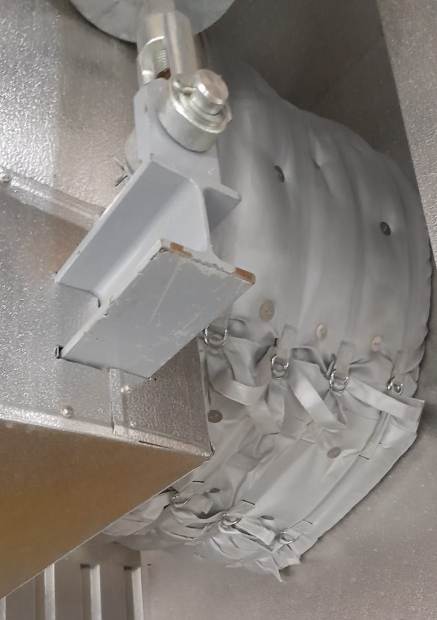
Materials used for power plant insulation jackets
The insulation core and the facing fabric of every jacket are selected for the service temperature, the environment and the mechanical load of the specific application:
Mineral wool mats — the standard core for hot equipment such as steam piping, valves and heat exchangers; non-combustible and dimensionally stable.
Higher-temperature fibres — for exhaust systems and equipment operating above the range of standard mineral wool.
Facing fabrics — glass-fibre fabrics with coatings (silicone, aluminium or others) selected for temperature, abrasion, moisture and chemical exposure.
Fastening systems — hooks, studs, straps or lacing chosen for accessibility and removal frequency.
Because we cut jackets on CNC tables from CAD patterns, insulation thickness, material and section layout can be adapted to each item of equipment — including the requirements for accessible surface temperature for personnel protection. CAD/CNC fabrication supports accurate, repeatable production; the installed thermal performance of any jacket depends on the design, the fit and the installation.
What information is needed to specify power plant insulation?
To quote and design jackets for power plant equipment, we need:
Equipment type, dimensions and quantities — drawings if available, otherwise photos with measurements.
Normal and design temperatures — and any relevant excursions.
The objective — a required outer-surface temperature (personnel protection), a heat-loss limit, or a process-temperature requirement.
Installation environment — indoor or outdoor, exposure to weather, oil, chemicals or abrasion.
Access requirements — which parts must remain operable or inspectable, and how often the jacket will be removed.
Project-specific requirements — material specifications, documentation, labelling or acceptance criteria.
The more of this information you can send with your enquiry, the faster we can prepare a technically sound proposal.
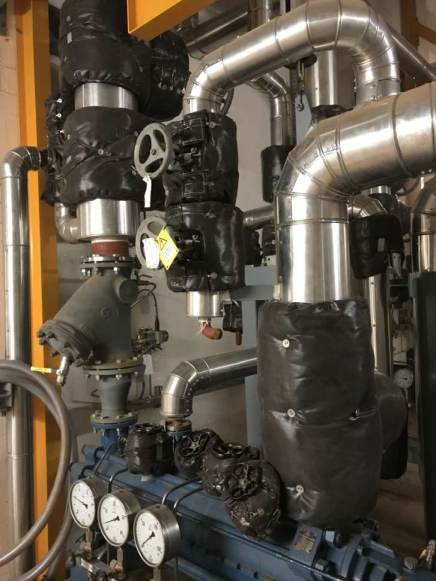
Insulation for different types of power plants
Gas and combined-cycle power plants. Gas turbines, HRSGs and their extensive valve populations are typical applications for removable insulation: high maintenance frequency and high surface temperatures. Exhaust systems and heat-traced lines complete the picture.
Steam and coal-fired power plants. Boilers, steam piping networks, feedwater heaters and large valve populations — hard insulation dominates the fixed surfaces, while removable jackets are used wherever access is regularly needed: valves, manholes, inspection covers, instruments.
Nuclear power plants. Nuclear plants have specific requirements for insulation materials — including material purity and resistance to stress corrosion. We cover this in detail on our dedicated nuclear plant insulation page.
Energy from waste and biomass power plants. Boilers are powered by different fuel in this case. It’s either household waste or various forms of biomass (straw, chipped wood, coconut shells and others).
How we design and manufacture power plant insulation
Every project starts with your input — photos, dimensions, drawings or a site survey. We then:
Design the jacket in CAD, split into removable sections so that each part can be taken off independently.
Cut the insulation and fabrics on CNC tables, for accurate, repeatable fabrication.
Sew and assemble each jacket with the fastening system suited to the access frequency.
Label and deliver, with installation normally done by plant staff.
The scope of each order — from a handful of valve jackets to a larger equipment group — is assessed individually; send us your equipment schedule and we will confirm what we can take on.
Do you have requirements for power plant insulation?
Tell us about your equipment — a photo, a drawing or a dimensional sketch is enough to start. We will come back with a proposal and a quotation.
FAQ — Power plant insulation
What is power plant insulation?
Power plant insulation is the thermal (and often acoustic) insulation of the equipment in a power plant — turbines, boilers, piping, valves, heat exchangers, tanks and exhaust systems — to reduce heat loss, protect personnel and control process temperatures.
What is the best insulation for power plant equipment?
It depends on the application. For equipment that requires regular access — valves, flanges, turbine casings, inspection covers — removable insulation jackets are a common answer, because they are designed for repeated removal and reinstallation rather than dismantling. Fixed hard insulation may suit surfaces that do not require repeated access. The right choice depends on the access frequency, temperatures, environment and budget of each installation.
How much does power plant insulation cost?
Pricing depends on equipment dimensions, operating conditions, insulation materials, access requirements and quantities. Send us an equipment list, drawings or photographs so we can assess the application and prepare a quotation.
How long does it take to remove and reinstall a removable insulation jacket?
It depends on the jacket’s size, fastening system, location and your site’s procedures — the design is adapted to how often each jacket needs to come off. The main advantage over hard lagging is that jackets are designed for repeated removal and reinstallation by plant staff rather than rebuilding by insulation contractors.
Can you assess an enquiry covering multiple pieces of equipment?
Send an equipment schedule, quantities, drawings and operating conditions. We will assess the proposed scope and requirements before preparing a quotation.